
In this article, we talk about all things Wasabi. We look at... what is wasabi? Why is wasabi so hot?! Why it's so hard to grow? And even why it's green.
And the good news is that I was lucky enough to spend time at a wasabi farm IN THE UK!
The Wasabi Company invited me, fellow bloggers and local chefs to an event at their farm in Hampshire to learn all about wasabi. We got to find out everything thing there's is to know about wasabi, sample some amazing produce containing wasabi, and try other traditional Japanese cuisines.
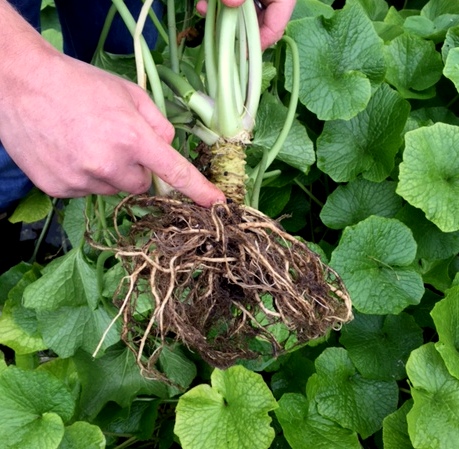
What is Wasabi?
Put simply - wasabi is a plant in the mustard family.
And for those looking for a more technical description of wasabi...
Wasabia japonica is a perennial brassica, native to the Japanese mountains. Semi-aquatic, wasabi grows in the wild alongside streams with large trees overhead that provide a canopy of shade.
What Does Wasabi Taste Like?
Wasabi has a hot and spicy taste that is a lot like hot mustard or horseradish. Unlike chili pepper, the spice from wasabi stimulates the nose more than the tongue.
You can also eat every single part of the wasabi plant, from the roots to the flowers. They all have a slight peppery heat, but the most pungent flavour is held in the rhizome/thickened stem.
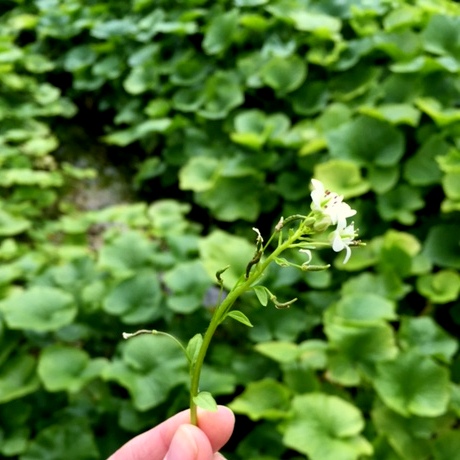
A Little Know Fact About Wasabi
Well, I'll let you into a secret that unless you've eaten it in Japan, whatever wasabi you've tried probably isn't wasabi, or contains such a teeny tiny amount it may as well not be.
Most wasabi products are actually substituted with horseradish and mustard. So having the real deal being grown in the Dorset and Hampshire farms, is certainly a good thing for Japanese cuisine in the UK.

The type of wasabi we saw being grown on the farms was the higher-end 'sawa wasabi'. This means it is grown near a fresh oxygen-rich water supply, as opposed to in normal soil (Oka wasabi).
How do you Harness the Wasabi Flavour?
This is more tricky than you would have thought because of the brief window of flavour. The way they capture it is to essentially freeze-dry it.
While we were talking to various suppliers and producers who used it, there seemed to be three main ways to best capture the flavour from the grated rhizome;
- Have it fresh at the table - This is what you should expect to see at high-end Japanese restaurants. The simplest and best way to get the flavour is simply to grate it fresh at the table and serve it, so you get the impact of the heat straight away.
- Grate a batch, spread it thinly and freeze it quickly! - We were given a rhizome to take home and this was the advice given for us to use it at home, or even in some restaurants. If you freeze it quickly it will halt the reaction and keep the flavour, and can even last up to a year!
- Freeze-dried wasabi powder - Much like the wasabi pastes you see, this is the commercial freeze-dried grated rhizomes as a powder so you can make your own paste. The major difference is The Wasabi Company powder contains 20% wasabi, which is more than any other wasabi paste/powder available currently.
Why is Wasabi so Hot?
The hot taste of wasabi is actually caused by a chemical reaction which occurs when you break the plant cell walls. This is done when you macerate the rhizome/stem (ie grind it with the special grater).
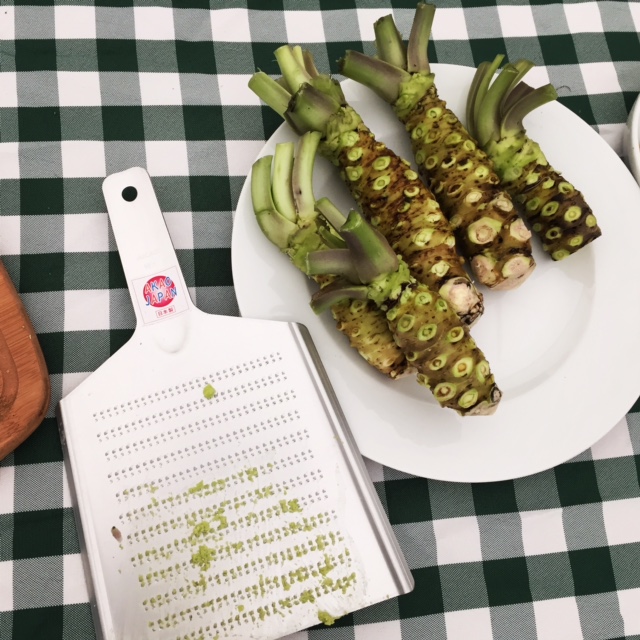
This means that the taste of wasabi, like any chemical reaction, has a timescale; it peaks after a few minutes and fades after 10-15 minutes, so there's a window in which you get the best flavour.
If you were to just cut off a piece of wasabi rhizome and chew and eat it you wouldn't get the same flavour as if you grind it and wait a minute or so.
It also means that it's a particular skill to harvest the flavour.
In comparison, the heat you get from chillies comes from the chemical capsaicin, which is oil/wax based and a chemical in itself rather than a reaction, so its heat isn't so short-lived.
Wasabi is a different kind of heat to chillies as rather than stimulating the mouth, it stimulates the nasal passages.
So when you eat it you experience a heat sensation at the front of your mouth and up through your nose.
This is the same kind of taste or heat as horseradish and mustard. The difference is that wasabi is milder and more delicate in comparison.
This is another reason why horseradish is often used instead of wasabi as not only is it easier to grow but is also more pungent making it easier to harness its flavour.
Why is Wasabi so Hard to Grow?
Wasabi is a bit of a picky plant, deemed the most difficult plant to grow commercially.
It is usually found growing along stream beds in the mountainous regions of Japan. It likes a lot of water and shade. It is specific about the temperature it likes to grow in, and likes some humidity, but can't handle too much.
Add to that the fact it takes 2 years to reach maturity, and you can understand why it would be difficult to cultivate commercially, outside the areas it has naturally grown in for thousands of years.
This is why real wasabi is so expensive.
How did The Wasabi Company Manage to Grow it?
The farm is located on a confined aquifer, which to us non-geologists means that the underground layers are such, that water can permeate through and be collected (like in a well or spring).
This can then be directed and run through the beds to simulate similar conditions to that of growing near a stream.

It also means that the water is collected naturally from the ground. The temperature remains a fairly constant 11 degrees Celsius, again perfect for the wasabi.
It also has the benefit of being a mineral-rich water supply. The water naturally drains out to the local rivers and streams, this means no pesticides can be used as it would affect the local wildlife. Another added difficulty to growing the wasabi, but also a bonus for the conscious buyers and eaters!

They also need to use shade netting to keep the wasabi plants happy at around 60% shade.
All this combined has created the UK's first commercially grown wasabi.
Health Benefits of Wasabi
Without getting too technical... Wasabi is a member of the brassica family. Foods like broccoli, cauliflower and cabbages.
We all know these are good for us.
But wasabi in particular contains what they call long-chain ITCs (isothiocyanates), unlike other brassicas.
These are suggested to have great anti-microbial, anti-inflammatory, anti-coagulant and chemoprotective properties. And have a long history of being used as part of Japanese herbal medicines.
So, yes wasabi is good for you 🙂
Other Japanese Produce at the Event
It wasn't all about wasabi!
It was a celebration of all things Japanese, which after spending a week there for our honeymoon (and being desperate to return) I absolutely loved!
Highlights included:
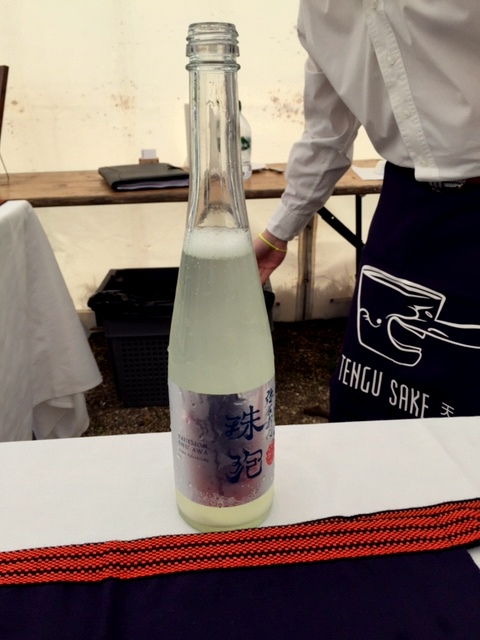
Sake from Tengu sake
The photo shows a really good sparkling sake.
Yuzu Ponzu
Delicious, high-end Japanese vinegar.

Chococo
Watercress and wasabi flavoured chocolate from Chococo

Twisted Nose
Watercress Gin and wasabi Vodka from twisted nose

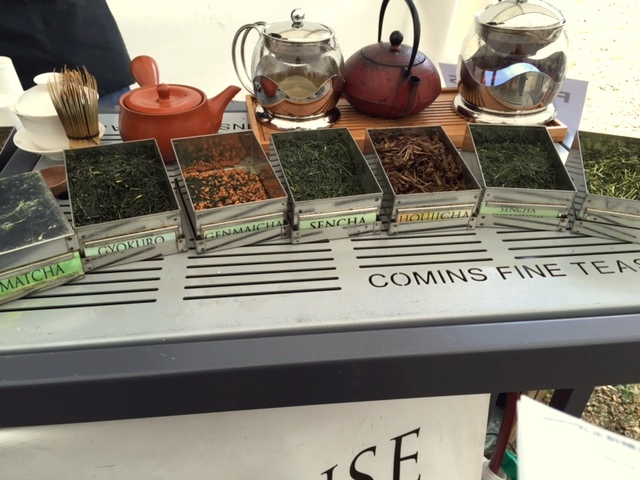
Comins Fine Teas
Japanese Teas from the lovely Comins Tea House (who also do great black teas for my sage teamaker)
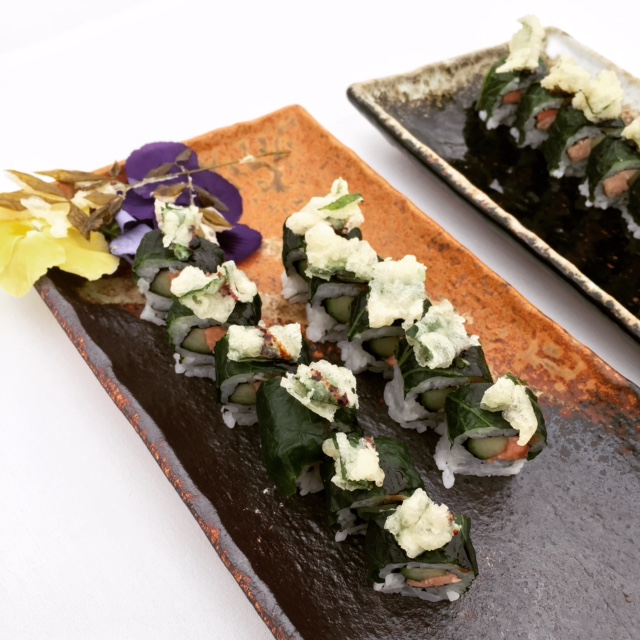
Kyoto Kitchen
Traditional Japanese catering from Kyoto Kitchen
Who Are The Wasabi Company?

The Wasabi Company is the first commercial wasabi farm in the UK.
The site we visited was previously used for growing watercress, but was a little too small and the ground too soft, so they were looking into other things they could do with it. This is when a Japanese chef who happened to be a friend of theirs suggested growing wasabi, as the conditions needed were similar.
It all went from there, and three years on they've grown from strength to strength with lots of demand from top restaurants in the UK wanting to use their UK grown produce.
As well as having a tour of the beds to see where the magic happens. The event was far more educational than I could have imagined, I loved it!


Super interesting. Had no idea it was so hard to grow. Intrigued as to what wasabi chocolate tastes like? Thanks of including my tuna & mayo recipe
You’re welcome! It looks fab! It actually tastes very good! They were running a pole as to which people proffered more, the wasabi with milk or dark chocolate. I think I preferred it with milk as it was sweeter so balanced out the spiciness more.